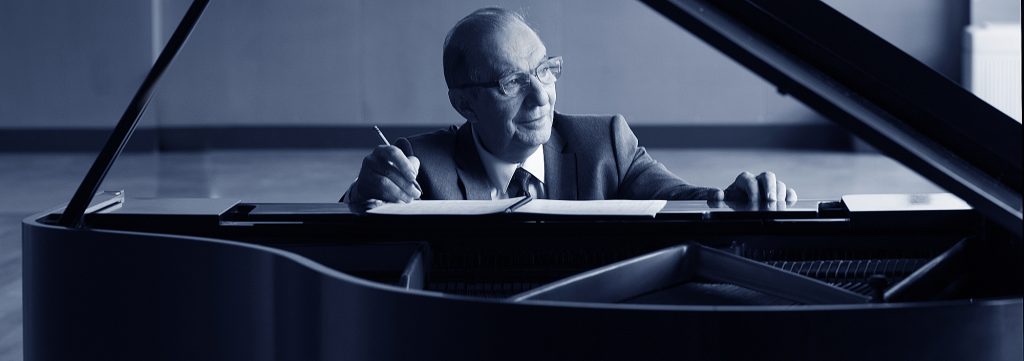
Edward Kalendar was born in Dushanbe (USSR) on July 8, 1941. When World War II ended, his family moved to Lviv, Ukraine, and it was there, at the age of eight, that he heard jazz music for the first time. The appreciation and performance of jazz during Cold War was considered to be an unpatriotic activity. Despite official disapproval, Kalendar nurtured his love for the genre by listening to black market gramophone recordings of famous jazz performers made on X-ray films. When Voice of America initiated jazz programming on their radio broadcasts in 1955, Mr. Kalendar became a devotee of their late night shows, memorizing standards by Duke Ellington, Ella Fitzgerald, Art Tatum, Thelonious Monk, Glenn Miller, Erroll Garner and more.
Mr. Kalendar received his musical training at the Tashkent and Moscow Conservatories, where he studied classical composition under Albert Malakhov, Boris Zeidman and Aram Khachaturian. Years later, Kalendar participated in a seminar conducted by Pierre Boulez during his residency at the Moscow Conservatory.
While studying at the Tashkent Conservatory, Kalendar dreamed of a time when playing jazz in concert halls would become possible. Despite the Khrushchev Thaw, jazz music continued to encounter erratic levels of political tolerance throughout the Soviet republics. Mr. Kalendar formed and conducted an underground big band MODUL, made up of fellow jazz enthusiasts. At one point, the Dean of the Conservatory warned him that “practicing a Western genre alien to Soviet youth” might have a negative impact on his musical future. Kalendar continued to lead the band clandestinely for another six years. When the government officials began to relax their attitude towards jazz in the late 1960s, Mr. Kalendar became an authority on the genre, both as a performer and an educator.
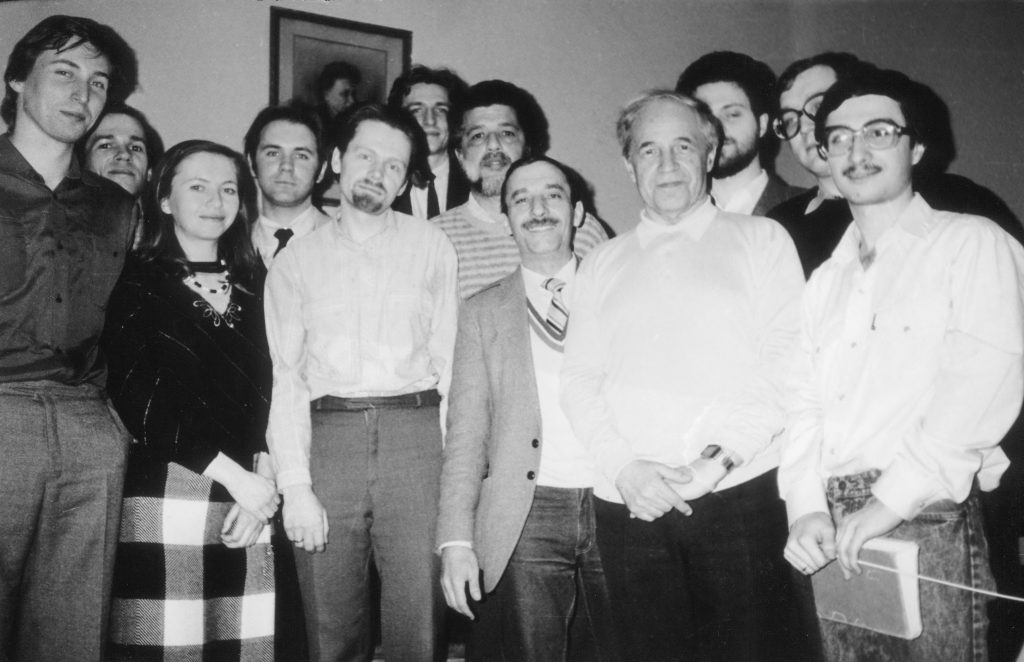
Class photo with Pierre Boulez after his seminar in Moscow

Edward and his big band in Tashkent
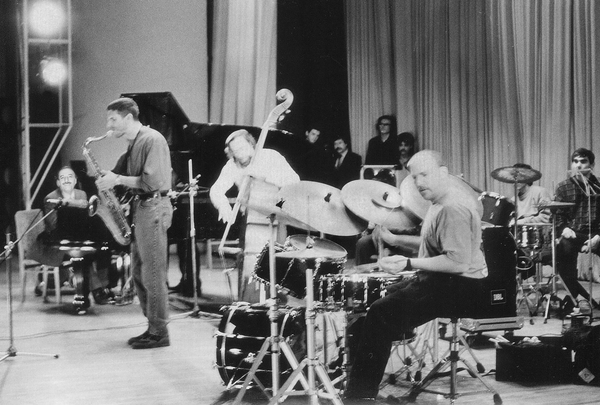
Performing with the renowned American saxophonist Bob Berg during his tour of the former Soviet Union
Mr. Kalendar wrote his first film score in 1973, for a full feature entitled Autumn Novella. He composed twenty-five more original scores for documentary, feature and animated films from the mid-1970s to the mid-1990s. During that time, he achieved widespread popular acclaim as a songwriter and composer, and his music was frequently broadcast throughout the Soviet Union and in Europe. Mr. Kalendar was a conductor of the Tashkent Radio Orchestra from 1968 to 1976. He continued to make regular appearances as a guest conductor of the Orchestra until 1993.
Mr. Kalendar’s expertise in ethnic music brought him to Moscow in 1991. He became the music director of The Folk Music Theatre where he arranged, rehearsed, produced and toured internationally with instrumental and vocal works from around the world.
In 1994 Kalendar and his family moved to their new home in Queens, New York. Mr. Kalendar continued his multi-faceted musical life as a composer, performer and educator.
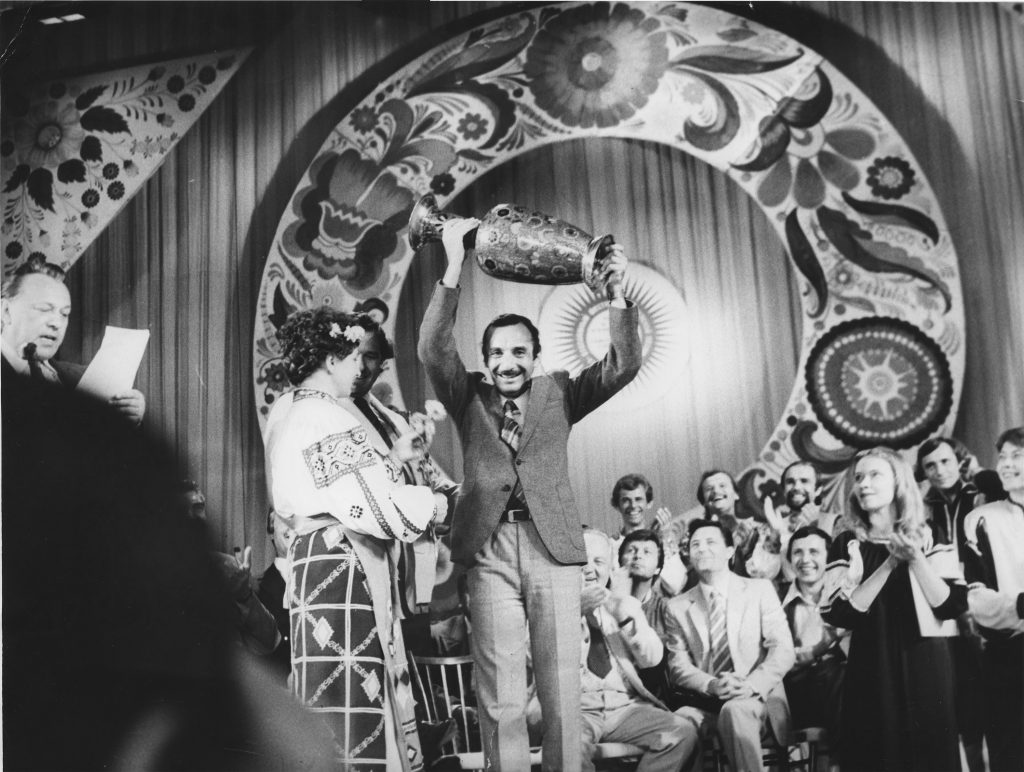
Awarded the prize for the best jazz arrangement at the Crimean Dawn International Competition, Ukraine 1983
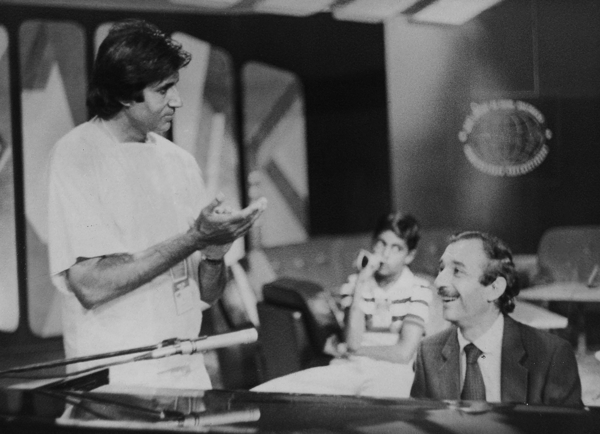
Rehearsing Indian music with the Bollywood mega-star Amitabh Bachchan, for a television broadcast
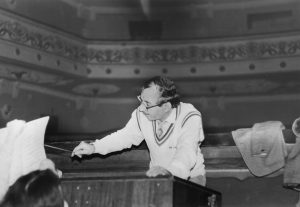
Rehearsing his children’s opera “Kolobok” at the Tashkent State Opera Theatre
His commissions ranged from music for off-Broadway theater to soundtracks for Olympic figure skating champions to award winning children’s songs. As a pianist Mr. Kalendar made concert appearances at Lincoln Center, Vail Jazz Festival, The Chappel at West End Collegiate Church, Tilles Center, the United Nations, Steppingstone Concerts, Rockefeller Center, and other prominent venues. He performed with saxophonists Bob Berg and Larry McKenna, vibraphonist Ray Alexander, composer and multi-instrumentalist Chris Brubeck, bassist James
Cammack, clarinetist Giora Feidman, the New York Big Band with Joe Battaglia and many more.
Mr. Kalendar’s was an insightful and dedicated pedagogue with over 50 years of teaching history. His classical composition, theory and jazz performance students have continued their music education at the Oberlin Conservatory, Princeton University, Harvard University, CUNY, the Jerusalem Academy of Music, Mannes College of Music and The Juilliard School. Many of his former students have become successful composers (classical, film and songwriters), jazz singers and instrumentalists.
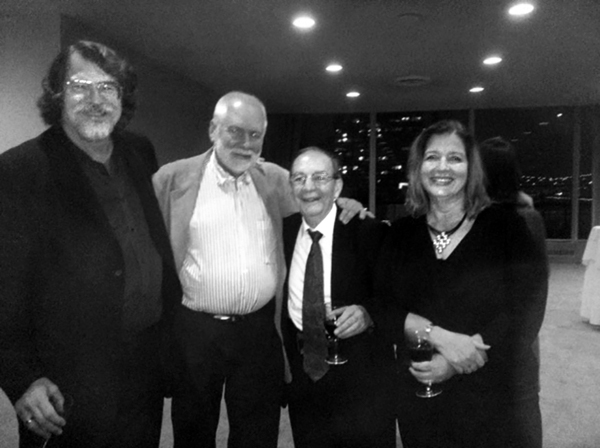
With Chris Brubeck, Theresa Brubeck and Russell Gloyd after the joint performance at the United Nations
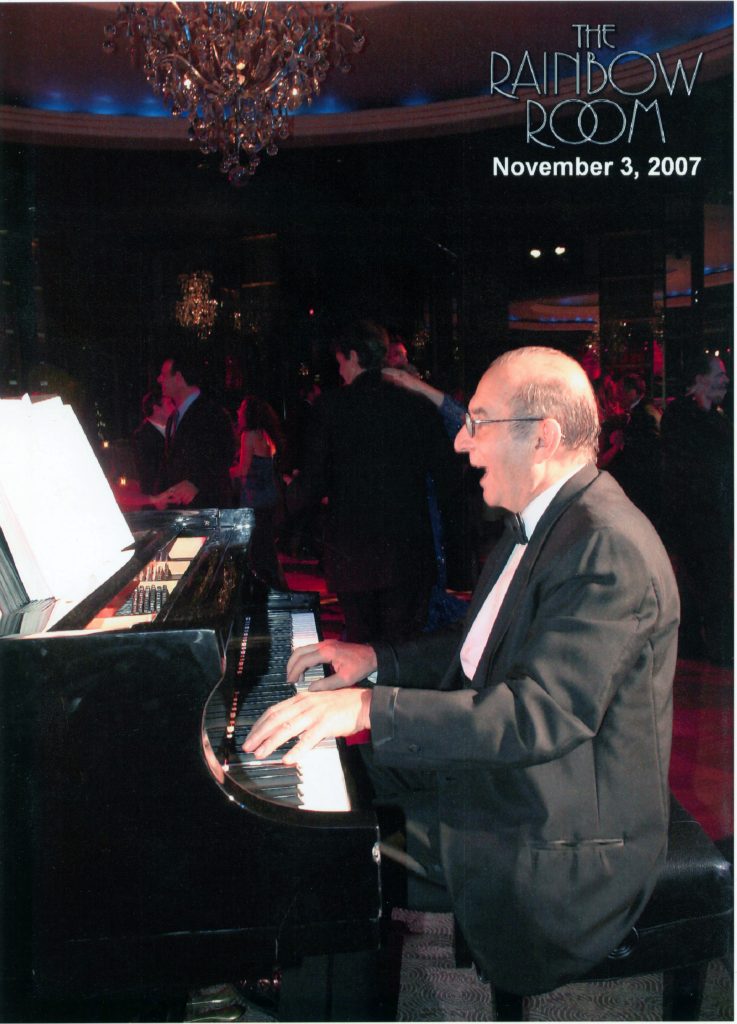
Entertaining at the Rainbow Room at Rockefeller Center
Kalendar’s original music and arrangements have been performed and recorded by Manhattan Symphonie, Bachanalia Chamber Orchestra, Temple University Youth Chamber Orchestra, Moscow Cinema Orchestra, the Jerusalem Saxophone Ensemble, and members of the National Symphony (Washington DC), Chicago Symphony and the Philadelphia Orchestra.
Articles on Edward Kalendar appear in the following publications: “Soviet Jazz: Issues, Events, Performers” (A. Medvedev & O. Medvedeva, Moscow, 1987), “Jazz in the XX Century” (V. Feiertag, St. Petersburg, 2001), “Jazz Conversations” (S. Gilev, Tashkent, 2008), “Jazz Encyclopedia” (St. Petersburg, 2008).